

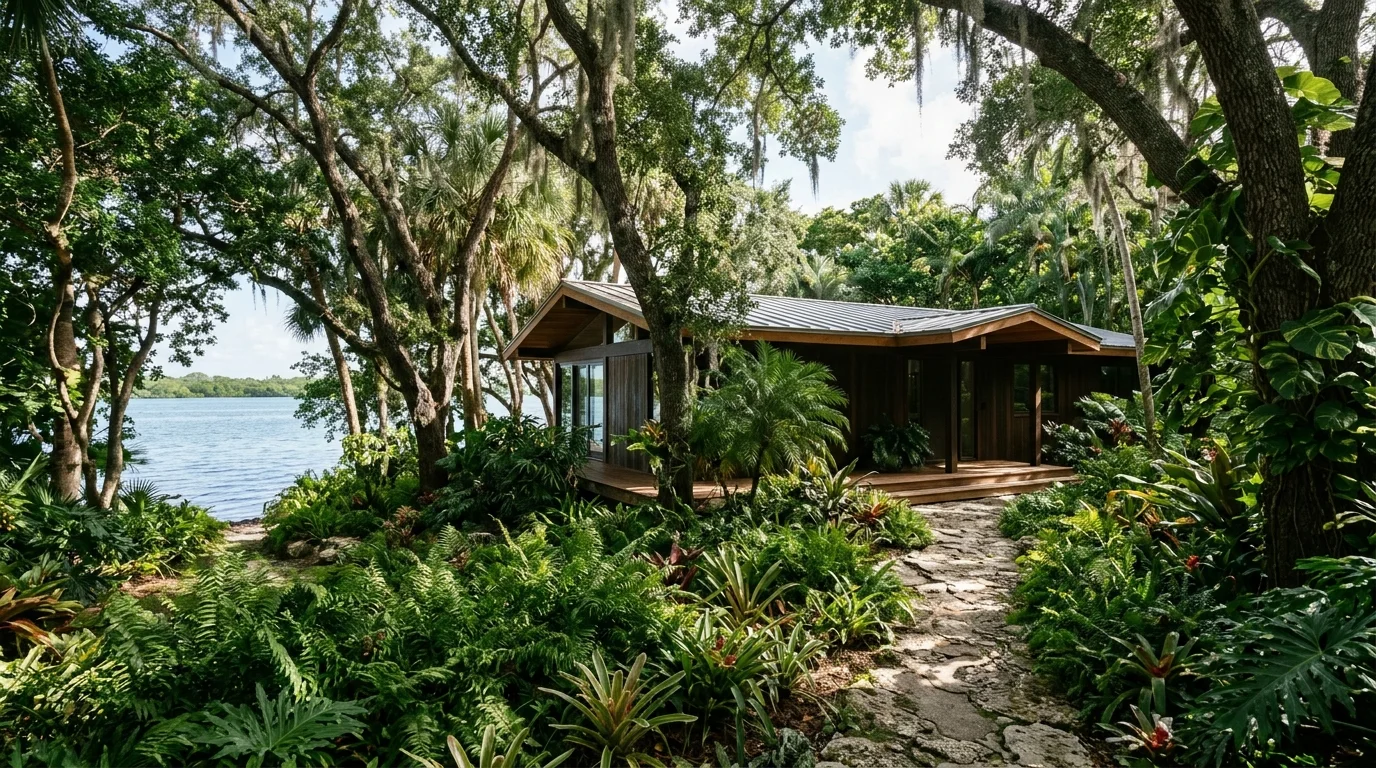
How to judge a Coconut Grove agent on the City of Miami rules that shape every Grove sale: NCD-3 zoning, tree and historic permits, seawall heights, the 2027 flood maps and condo law. From The Audrey Ross Team at Compass Florida.
The Short Answer
The right agent for Coconut Grove treats it as a City of Miami neighborhood: zoned under Miami 21, much of it inside the NCD-3 conservation district, with City tree, historic, seawall and flood rules that decide what a property can become. Ask any candidate to apply those rules to your address. Since 2017, Audrey Ross has closed 26 sales in Coconut Grove, 21 of them at $1 million or more, through October 2026.
Choosing an agent in Coconut Grove is a test of local law as much as of taste. The Grove has no municipal government of its own. Its lots, trees, seawalls and older houses answer to City of Miami codes, and the agent you hire should know them before the first showing.
We are The Audrey Ross Team at Compass Florida, and our office sits at 4699 Ponce de Leon Boulevard in Coral Gables. Audrey Ross opened her own firm in 1984, and the team has worked this market for more than 40 years. This guide sets out the City rules that decide what a Grove property can become, the questions that test whether an agent knows them, and our own record in the Grove. For prices, sub-areas and the village itself, read our Coconut Grove real estate guide.
Is Coconut Grove Its Own City, and Why Does That Matter When You Hire an Agent?
No. Coconut Grove is a neighborhood of the City of Miami, and the City’s zoning code, building department, code enforcement and flood ordinance govern every Grove address. The Grove’s own conservation rules are written into the City’s Miami 21 zoning code, which notes that the community of Coconut Grove predates the City of Miami.
The fastest check is the folio number, the 13-digit number the Miami-Dade Property Appraiser assigns to every property. The City of Miami states that a property whose folio does not begin with 01 is not in the City. A mailing address does not settle which city governs a lot; check the folio.
What Changes at the City Line?
Coral Gables is a separate city with its own code and building division, so an agent who works mainly there can carry the wrong rulebook east. In the Grove, the controls that move a price sit in four places: the NCD-3 overlay in Miami 21, the City tree ordinance in Chapter 17 of the City Code, the City’s historic preservation board, and the City’s seawall and flood chapters. Our comparison of Coral Gables and Coconut Grove sets the two places side by side.
What Does the NCD-3 Conservation District Change for a Grove Buyer or Seller?
NCD-3 tightens Miami 21’s standard single-family rules across much of the Grove: lower height, more green space, deep front setbacks and limits on splitting lots. It decides what a lot can carry, so it decides what the lot is worth.
The City created the Coconut Grove Neighborhood Conservation District, NCD-3, to preserve the historic, heavily landscaped character of the Grove’s residential areas and to protect its tree canopy and green space. The City’s planning department describes the Neighborhood Conservation Districts as zoning overlays and places two of its three in the Grove: NCD-2, covering the Village West Island District and Charles Avenue, and NCD-3, covering much of the rest. Inside NCD-3, the Miami 21 rules for the T3 single-family transect apply, and where the two conflict, NCD-3 controls.
| NCD-3 rule | What the code says | Why it moves a price |
|---|---|---|
| Height | 25 feet to the midpoint between eave and ridge, measured from flood level or average sidewalk elevation, whichever is higher (Estate Lots have their own two-story limit) | Caps the volume of a rebuild |
| Green space | At least 0.3 times the lot area; permeable surfaces in required yards may reduce it by 25 percent | Limits footprint, paving and pool decks |
| Front setback | 30 feet, with limited projections for porches and loggias | Pushes new houses back from the street |
| Side and rear | 5 feet minimum per side; combined sides rise to 25 feet (one story) and 35 feet (two stories) on sites over 10,000 square feet; rear 20 feet | Narrows the envelope on wide lots |
| Building sites | Platted lots under an existing house or accessory structure, such as a pool, are one building site; a second house or a smaller site needs a Warrant | Two platted lots may not mean two houses |
| South Bayshore Drive | Yards adjacent to South Bayshore Drive at least 70 feet on large, oversized and estate lots | Deep setback on the bayfront corridor |
Source: City of Miami, Miami 21 Code, Appendix A, section A.3, Coconut Grove Neighborhood Conservation District NCD-3, as amended through Ordinance 14375 of October 1, 2025. Retrieved November 2026.
The Pricing Skill NCD-3 Creates
A Grove lot is priced on what NCD-3 lets it hold. Before you offer, the agent should tell you whether a parcel is one building site or two, how green space and setbacks shrink the envelope, and whether the asking price assumes a house the code will not allow. On the sale side, that knowledge keeps a listing from promising a lot split that needs a Warrant. Building sites that existed before September 24, 2005 cannot be reduced except by Warrant. NCD-3 also sets its own lot sizes for some designations: 10,000 square feet for large lots, 20,000 square feet for oversized lots and one acre for estate lots, each at least 100 feet wide.
How Do Tree and Historic Rules Affect a Grove Purchase or Renovation?
They set the schedule. NCD-3 refers every demolition permit to the City’s Environmental Resources Department for compliance with the tree ordinance, and to the Historic and Environmental Preservation Division for any structure 50 years or older.
Trees
The City requires a permit before a tree is removed or relocated on covered property unless the code exempts it, and a separate pruning permit to cut more than 25 percent of a tree’s canopy within one year. The City posts its intended decisions on tree permits and provides a process to appeal them. A mature tree where a new wing or pool is planned is a permitting question. Get a tree survey before the design budget is set.
Historic Designation
The Miami Register of Historic Places holds more than 100 individual resources and sites and 10 local historic districts. To check an address, search it on the City’s GIS zoning map and turn on the Historic Preservation and Historic Districts layers. Staff may approve smaller repairs on a designated property as a Standard Certificate of Appropriateness. New construction, demolition or large alterations likely need a Special Certificate of Appropriateness from the Historic and Environmental Preservation Board, a review the City says can take up to two months and carries a fee based on the work. On Charles Avenue, inside NCD-2, new construction, major alterations and additions are reviewed by Waiver, with the board advising the Planning Director on new construction.
The Trap to Avoid
Pricing a Grove teardown as if the house will come down on your timetable. In NCD-3, the demolition permit goes to tree review and, for a house 50 years or older, to historic preservation staff. Order a tree survey and check the historic layers on the City’s zoning map during the inspection period, and price the lot on what those reviews allow.
What Should a Waterfront Buyer in the Grove Ask About Seawalls and Docks?
Ask how high the seawall is against the City’s minimum. In tidally influenced areas of the City of Miami other than the Miami River and its tributaries, section 29-89 of the City Code sets a 6-foot NAVD 88 minimum for seawalls on new construction, when a property is substantially improved, and when a seawall repair passes the substantial repair threshold.
A repair passes that threshold when it covers 50 percent or more of the wall’s length, costs 50 percent or more of a new wall, or changes the elevation along half or more of the structure. At that point the whole frontage must meet the current minimum. Section 29-95 requires every owner to keep the seawall in good repair, and an owner whose wall sits below the minimum may not let tidal water flow onto neighboring lots or the street. A seawall survey with elevations along the wall answers the question before you are under contract.
Docks and Boat Lifts
Waterfront work needs City and County permission. The City requires a building permit before any waterfront improvement is built, rebuilt or repaired (section 29-83). Miami-Dade County requires a Class I permit under section 24-48 of the County Code for most work in, on, over or upon tidal waters, including inside municipalities; a short list of minor repairs is exempt. The County lists a single-family dock, davit or boat lift that protrudes no more than 25 percent of the waterway’s width among the work it may review as a short-form project. The US Army Corps of Engineers and the Florida Department of Environmental Protection may also require permits, depending on the project.
Depth and bridge clearance decide whether a boat fits; our guide to deep-water, no-bridge dockage in Miami covers both. Ten of the 26 Coconut Grove sales Audrey Ross has closed since 2017 were waterfront properties. Her Grove record also includes one sale in the guard-gated enclave of Hughes Cove. For the gated enclaves across the bay corridor, see our guide to Miami’s guard-gated waterfront communities.
How Do Flood Maps and the 50 Percent Rule Work in Coconut Grove?
New FEMA flood maps for Miami-Dade County and its cities, including the City of Miami, take effect on February 19, 2027. Check both the current panel and the new one for any Grove address before you offer.
FEMA published that date in the Federal Register on October 14, 2026, and the new maps will be on FEMA’s Flood Map Service Center by then. Miami-Dade County notes that an elevation certificate shows how high a house was built in relation to its flood zone, and its Flood Zone Hotline, 305-372-6466, confirms a property’s zone.
The 50 Percent Rule in the City Code
The City’s flood ordinance governs renovation. A substantial improvement is any combination of work whose cumulative cost over a two-year period equals or exceeds 50 percent of the structure’s market value before the work starts; in a coastal high hazard area the period is five years. A home in a special flood hazard area that crosses that line must have its lowest floor at or above the base flood elevation plus one foot (City Code sections 20-1 and 20-4). An alteration of a historic structure that does not end its designation is excluded. For an older Grove house in a flood zone, this threshold is the line between a renovation and a rebuild.
A seller of residential property in Florida must give the buyer a flood disclosure at or before the signing of the contract, stating whether the seller knows of flood damage during ownership, has filed a flood insurance claim, or has received assistance for flood damage, such as from FEMA (section 689.302, Florida Statutes).
The Takeaway
In the Grove, a renovation budget starts as a flood question. Price the work against the 50 percent threshold and the February 19, 2027 map before you price the kitchen.
What Should a Condo Buyer Along South Bayshore Drive Check?
The building’s structural record. Florida requires a milestone inspection for condominium buildings three habitable stories or taller by December 31 of the year the building turns 30, or 25 where the local enforcement agency sets that earlier date, and every 10 years after (section 553.899, Florida Statutes).
Each such building also needs a structural integrity reserve study at least every 10 years (section 718.112(2)(g)). On a resale, the buyer is entitled to the milestone inspection summary, the most recent reserve study and the condominium documents at the seller’s expense, and the contract is voidable by written notice within 7 days, excluding Saturdays, Sundays and legal holidays, after the buyer signs and receives the documents, unless the contract acknowledges the buyer received the documents more than 7 days, excluding weekends and holidays, before signing (section 718.503(2)). Our guide to buying a Miami condo after Surfside explains the reserve rules, special assessments and financing in full.
How Do You Check Open Permits and Liens on a Coconut Grove Address?
Through the City of Miami. The City runs an online lien and violation search by folio for $200, and its iBuild portal shows each permit’s status, issue date and expiration date.
Search permit history by address, folio or process number, and read each permit’s General Info tab. Run both searches before the inspection period ends. A permit left open by a prior owner, or a seawall cited under the maintenance section, is far easier to resolve while the seller still owns the house, and the contract can say who closes it and by when.
What Should You Ask a Coconut Grove Agent Before You Hire One?
Ask questions that only someone who works the Grove can answer for your address. A candidate who answers these from memory, and then shows you where each answer is written, has done this before.
| What to ask | Why it matters in the Grove | Where to check it |
|---|---|---|
| Is this parcel one building site or two? | NCD-3 merges lots that hold one house or improvement | Miami 21 Appendix A; survey |
| What will NCD-3 let this lot carry? | 25-foot height, 0.3 green space, 30-foot front setback | Miami 21 Appendix A |
| Which trees need permits, and is the house 50 years or older? | Demolition goes to tree and historic review | City tree and historic pages |
| Is it designated historic, or inside NCD-2? | Designated: a Special COA; Charles Avenue: Waiver review | City GIS zoning map |
| How high is the seawall against 6 feet NAVD 88? | A substantial repair triggers the full minimum | City Code 29-89; seawall survey |
| Which flood panel applies now, and after February 19, 2027? | Zone and base flood elevation set rebuild height | FEMA Map Service Center |
| Are there open permits or liens? | Permits and code cases sit with the City | City lien search; iBuild |
| Which of your Grove sales can I check? | Recorded prices and dates are public | Brokerage profile; Property Appraiser |
Sources: City of Miami, Miami 21 Appendix A (as amended through October 1, 2025), City Code sections 29-89 and 20-4, tree, historic preservation, lien search and permit history pages; FEMA, Federal Register notice of October 14, 2026. Retrieved November 2026.
How Can You Check an Agent’s Grove Record Yourself?
Compare the agent’s brokerage profile with the public record. A brokerage profile lists closed sales, and the Miami-Dade Property Appraiser’s Property Search and Comparable Sales tool show sale information for any address on that list.
Check that the sales match the Grove’s own product: conservation-district lots, waterfront, condominiums along the bay. Note the side: listing sales show how an agent prices a home; buyer-side sales show how they read one they did not market. Then confirm an active Florida real estate license on the Florida Department of Business and Professional Regulation’s license search.
What Is The Audrey Ross Team’s Record in Coconut Grove?
Since 2017, Audrey Ross has closed 26 sales in Coconut Grove: 13 single-family homes, 11 condominiums and two townhouses. 21 of the 26 were at $1 million or more, 12 at $3 million or more and nine at $5 million or more, up to $33 million. She represented the buyer on 18 and was the listing agent on nine, including one where she represented both sides. Ten of the 26 closed from January 2024 through October 2026.
Audrey Ross is Founder, CEO and Lead Agent of The Audrey Ross Team and a Vice President at Compass. In April 2016, Who’s Who in Luxury Real Estate presented her its Luxury Real Estate Lifetime Achievement Award, and she is a Founding Regent of Who’s Who in Luxury Real Estate representing Greater Miami. Ten Luxury Real Estate Advisors work with her: Carolina Caraccia, Cristina Cipolletti, Janet Tralins, Jeanie Vidaurreta, John Hopkins, Laureen Wheeler, Lisa Sayfie, Rie Nakai, Sebastian M. Garcia and Will Powers. If you are selling a Grove home, our guide on how to choose a Realtor to sell your Miami home covers the listing agreement and the interview.
Frequently Asked Questions About Choosing a Coconut Grove Real Estate Agent
Who is the best real estate agent in Coconut Grove?
The right Coconut Grove agent can explain, for a specific address, the City of Miami rules that decide its value: the NCD-3 conservation district in Miami 21, City tree and historic permits, the 6-foot NAVD 88 seawall minimum and the FEMA maps effective February 19, 2027, and can show recorded Grove sales. Since 2017, Audrey Ross of The Audrey Ross Team at Compass Florida has closed 26 sales in Coconut Grove, 21 of them at $1 million or more, according to her Compass record through October 2026.
How do I choose a Realtor in Coconut Grove?
Choose a Coconut Grove agent by testing local knowledge, not tenure alone. Ask whether a parcel is one NCD-3 building site or two, what the 25-foot height and 0.3 green space rules allow, whether the house is 50 years or older and faces historic review on demolition, how high the seawall sits against the City of Miami minimum, and which flood panel applies. Then compare the agent’s brokerage profile with sale records on the Miami-Dade Property Appraiser site.
Is Coconut Grove its own city?
No. Coconut Grove is a neighborhood of the City of Miami, so City of Miami zoning under the Miami 21 code, City building permits, code enforcement and the City flood ordinance apply. Much of the Grove also sits inside the NCD-3 Coconut Grove Neighborhood Conservation District, a City zoning overlay. The City of Miami’s lien search page states, as of November 2026, that a property whose folio number does not begin with 01 is not in the City.
What is NCD-3 zoning in Coconut Grove?
NCD-3 is the Coconut Grove Neighborhood Conservation District, an overlay in Appendix A of the City of Miami’s Miami 21 code. As amended through October 2025, it limits height on standard single-family lots to 25 feet measured to the roof midpoint (Estate Lots have their own two-story limit), requires green space of at least 0.3 times the lot area, sets a 30-foot minimum front setback and a 20-foot rear setback, and bars reducing building sites that existed before September 24, 2005 except by Warrant.
Do I need a permit to remove a tree in Coconut Grove?
Generally yes. The City of Miami requires a tree removal permit before a tree is removed or relocated on covered property unless the City Code exempts it, and a pruning permit to cut more than 25 percent of a tree’s canopy within one year. In the NCD-3 conservation district, every demolition permit is also referred for review under Chapter 17 of the City Code, the tree ordinance, as of November 2026.
How high does a seawall have to be in Coconut Grove?
In tidally influenced areas of the City of Miami other than the Miami River and its tributaries, section 29-89 of the City Code sets a 6-foot NAVD 88 minimum for seawalls on new construction, when a property is substantially improved, and when a seawall repair passes the substantial repair threshold. A repair passes it when it covers 50 percent or more of the wall’s length, costs 50 percent or more of a new wall, or changes the elevation along half or more of it. New docks and most seawall construction or repair in Coconut Grove also need a Miami-Dade County Class I permit under section 24-48 of the County Code.
When do the new FEMA flood maps take effect in Coconut Grove?
FEMA set February 19, 2027 as the effective date for new Flood Insurance Rate Maps for Miami-Dade County and its cities, including the City of Miami, in a Federal Register notice published October 14, 2026. A Coconut Grove buyer should compare the current and new panels on FEMA’s Flood Map Service Center and read the property’s elevation certificate before the inspection period ends.
How do I check for open permits and liens on a Coconut Grove home?
Use City of Miami records. As of November 2026, the City’s online lien and violation search costs $200 and runs by folio number, and the City’s iBuild portal shows permit history by address, folio or process number, with each permit’s active status, issue date and expiration date. Run both searches during the inspection period so the contract can assign who closes any open permit before the Coconut Grove sale closes.
How many Coconut Grove sales has Audrey Ross closed?
Since 2017, Audrey Ross has closed 26 sales in Coconut Grove: 13 single-family homes, 11 condominiums and two townhouses, according to her Compass agent profile covering March 2017 to October 2026. 21 were at $1 million or more and nine at $5 million or more, up to $33 million. Ten were waterfront properties, and ten closed from January 2024 through October 2026.
Weighing a Coconut Grove Purchase or Sale?
Bring us the address, and we will walk through what NCD-3, the tree and historic reviews, the seawall code and the 2027 flood map mean for it before you commit. Audrey Ross opened her own firm in Miami in 1984, and The Audrey Ross Team at Compass Florida has closed $2.4 billion in lifetime sales with ten Luxury Real Estate Advisors working from 4699 Ponce de Leon Boulevard in Coral Gables.
Contact The Audrey Ross TeamContinue Exploring Coconut Grove and the Bay Corridor
Sources
- City of Miami, Miami 21 Code, Appendix A, Neighborhood Conservation Districts, sections A.2 (NCD-2) and A.3 (NCD-3), as amended through Ordinance 14375, October 1, 2025.
- City of Miami Planning Department, Neighborhood Conservation Districts (NCDs), retrieved November 2026.
- City of Miami, Tree Information and Resources, retrieved November 2026.
- City of Miami, Historic Preservation, Determine a Historic Property and Special Certificate of Appropriateness, November 2026.
- City of Miami Code, Chapter 29, Landfills and Waterfront Improvements, sections 29-83, 29-89 and 29-95, Municode version of November 5, 2026.
- City of Miami Code, Chapter 20, Flood Damage Prevention, sections 20-1 and 20-4, Municode version of November 5, 2026.
- Miami-Dade County, Class I Environmental Permit, and Class I Permit Application for Coastal Construction, revised May 2025.
- Federal Register, FEMA, Final Flood Hazard Determinations, Miami-Dade County and Incorporated Areas, Docket FEMA-B-2166, October 14, 2026.
- FEMA Flood Map Service Center, retrieved November 2026.
- Miami-Dade County, Flood Maps, retrieved November 2026.
- The Florida Senate, Florida Statutes section 689.302, Disclosure of flood risks to prospective purchaser, 2026 statutes.
- The Florida Senate, Florida Statutes sections 553.899, 718.112 and 718.503, 2026 statutes.
- City of Miami, Run a Lien or Violation Search and View Permit History, November 2026.
- Property Appraiser of Miami-Dade County, Property Search and Comparable Sales, retrieved November 2026.
- Florida Department of Business and Professional Regulation, License Search, retrieved November 2026.
- Compass, Audrey Ross agent profile, closed sales, March 2017 to October 2026.
Facts on this page were checked against the sources above in November 2026. This guide is general information, not legal, tax or financial advice. Confirm the details for your own situation with a Florida real estate attorney, a licensed surveyor or engineer, or your title agent.
Social Cookies
Social Cookies are used to enable you to share pages and content you find interesting throughout the website through third-party social networking or other websites (including, potentially for advertising purposes related to social networking).